
Geotechnical Engineering in Christchurch
Our Christchurch-based geotechnical engineers investigate, design and certify projects across Canterbury's variable ground, from liquefiable soils in the eastern suburbs to Port Hills slopes and the Selwyn and Waimakariri Districts. With in-house geophysics, structural, civil and survey teams, we help you understand ground and seismic risk early, and design around what's actually there.
Prefer to talk? Call us on (03) 365 5960

10,000+
RESIDENTIAL ASSESSMENTS IN CHRISTCHURCH
50 +
YEARS OF EXPERIENCE
5
IN-HOUSE DISCIPLINES
How we help with Christchurch projects
Canterbury ground carries the legacy of the earthquake sequence and the variability that predates it: liquefiable soils, soft organic ground, TC2 and TC3 land, Port Hills slopes, and fast-growing greenfield areas where conditions change paddock by paddock. Our role is to understand those conditions early, design around them, and provide the reporting and certification your project needs.
Site investigations and geotechnical testing
Scoped for Canterbury's variability, from liquefaction assessment to Port Hills slope investigation, with our in-house geophysics team available to map ground conditions across larger or more variable sites.
Geotechnical reports for consent
We prepare reports for building consent, subdivision and land development across Christchurch, Selwyn and Waimakariri. Each report is scoped to address the site-specific ground and hazard information the relevant council is likely to need.
Foundation and ground improvement design
From site-specific residential foundations on liquefaction-prone ground to ground improvement, hillside piles and retaining foundations, we design around the conditions identified on site rather than broad assumptions.
Feasibility and site suitability assessments
Before you buy or commit, on TC3 land, a hillside section, or a greenfield block in Selwyn or Waimakariri, we assess what the ground will support, what it will demand, and what that means for cost, design and consent.
Retaining walls, slopes and earthworks
Cut and fill stability, retaining design, drainage and rockfall considerations on Port Hills and other sloping sites, plus earthworks and ground improvement staging on the flat.
Construction monitoring and certification
Construction monitoring, producer statements and sign-off for consented works, from the team that designed them, so when the ground exposed on site differs from expectation, the call gets made quickly and by people who know the design intent.
THE FIRST CONVERSATION
What you get from our Christchurch geotechnical team
When you contact us, we will give you a clear early view of what your site is likely to need. For many projects, that first conversation is enough to clarify whether you need a full investigation, a targeted review of existing reports, or only minor input.
If the honest answer is that your project does not need much from us, we will tell you that too.
whether a geotechnical investigation is required
what level of testing is likely to be needed
whether liquefaction, soft ground, slope, fill or flooding constraints may affect the project
what information council is likely to expect
what the investigation is likely to cost
what the next steps should be
WHY WORK WITH US
Why Cook Costello in Christchurch
Ground we already know
Cook Costello has assessed more than 10,000 properties across Canterbury since the 2010–2011 earthquake sequence. That experience gives us unusually detailed knowledge of local ground conditions and how land and buildings performed during the earthquakes.
One team, including in-house geophysics
Geotechnical, geophysics, structural, civil and survey under one roof, so investigation feeds straight into design without handovers between firms. Our geophysics team can map ground variability across a site and measure shear-wave velocity and Vs30.
Designed around measured ground conditions
The Canterbury Earthquake Sequence taught the country what unexamined ground costs. We investigate enough to understand the ground, then design around the conditions identified on site. That avoids paying for unnecessary conservatism, and it avoids under-scoping risks that genuinely matter.
REGIONAL CONTEXT
What makes Christchurch ground different?

Low-lying and flat terrain
Much of the city, particularly the east, sits on young, saturated soils with shallow groundwater: liquefiable in earthquakes, prone to settlement and flooding, with soft, compressible former swamp and floodplain deposits that challenge foundations, pavements and drainage. This is the ground behind the TC2/TC3 system, and knowing which behaviour applies to your site is the first question of any project here.
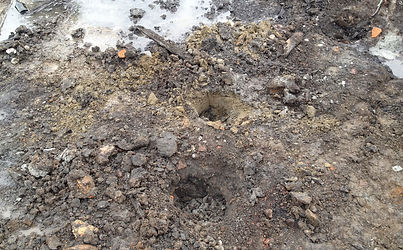
Fill, former land use and contamination.
Historical filling, landfill activity and HAIL-related land uses create bearing, drainage, contamination and consenting challenges, and where contamination is present it shapes investigation scope, earthworks planning and disposal of excavated material.
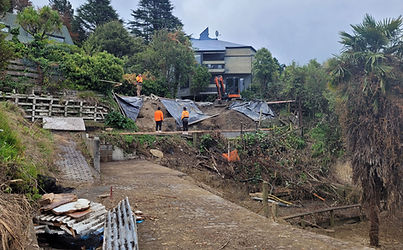
Port Hills and sloping sites
Wind-blown loess soils, runoff and variable rock create erosion, instability and retaining challenges, and some sites carry rockfall considerations that shape layout and what's developable. Access constraints affect buildability and cost, and the earthquakes' legacy on the Hills means slope assessment here draws on hard-won local knowledge.
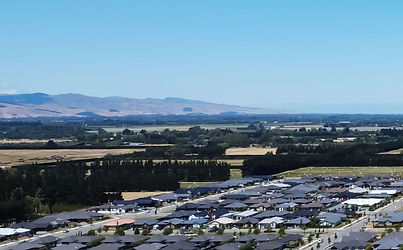
New subdivisions and expanding towns
Rapid development across Christchurch, Selwyn and Waimakariri is bringing housing and infrastructure onto land with variable ground conditions. Understanding that variability early helps inform earthworks, stormwater management, foundation design and development staging before the layout is finalised.
What do you need help with?


GET IN TOUCH
Understand your ground before you build
Tell us the site address, what you're planning, and anything you already have, existing reports (including any post-earthquake information), plans, photos or council correspondence all help, but none are required. Within one working day, one of our Christchurch team will come back to you with an initial view of the site, the investigation scope we'd recommend, and an indication of likely cost.
There's no commitment and no fee for the initial conversation. If the honest answer is that your project doesn't need our input, or only needs minor involvement, we'll tell you.